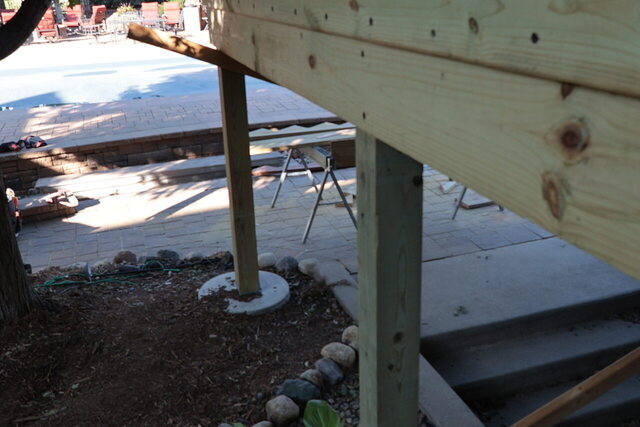
Foundation & Structural Repair
Foundation and structural repair, by a licensed general contractor
Harrisburg, South Dakota
Cracks, settling, sagging floors, and framing that has moved. We look at it, tell you what is actually wrong, and quote only the work the house needs.
5.0 across 25 Google reviews · Licensed & insured · BBB Accredited, rated A · TimberTech PRO Gold contractor

Every house in this part of South Dakota moves a little. Freeze-thaw cycles push and pull on foundation walls, expansive soils swell and shrink with the season, and a poured wall that went in during a wet fall settles differently than one that went in dry. Some of that movement is normal and cosmetic. Some of it is a wall taking a load it was never designed to take. The difference matters enormously, and it is not something a homeowner can reliably judge from a photo of a crack.
It is also the line between a job we should take and one we should hand off. Posts, beams, joists, footings, rim joist and sill plate rot are our work. A wall that needs piers, or a fix that needs an engineer's stamped design, is a different trade — and saying so at the start is cheaper for you than finding out halfway through.
Tell us what you're building.
Two required fields. Jace follows up directly to set a walkthrough.
Or call or text (605) 679-5223.
Rather not wait for a callback?
Pick a time for your estimateRather talk to an agent after hours?
Call the same number after hours — our phone agent picks up, takes the details and books your walkthrough on Jace's calendar.
What actually goes wrong with foundations here
Most of what we get called about falls into a handful of patterns. Vertical hairline cracks in a poured wall are usually shrinkage from the original cure and are cosmetic. Horizontal cracks are the ones that matter, because they mean the wall is taking lateral load — typically saturated soil pushing in during a wet spring or a freeze cycle. Stair-step cracking in block walls sits somewhere in between and depends on whether it is still moving. Then there is the settling side: interior posts and beams that have dropped, floors that slope toward the middle of the house, doors that stopped latching, and footings that were undersized or poured on ground that was not properly compacted. Water is behind more of this than anything else — grading that runs toward the house, a downspout dumping at the corner, or a window well with no drainage.
Horizontal cracks and bowing walls · Settling footings and dropped posts · Sagging floors and racked door openings · Water intrusion at the wall and slab · Egress and window opening framing · Rim joist and sill plate rot
What we repair, and when you need someone else
As a general contractor we handle the structural work that lives in framing, footings, and foundation openings: replacing failed posts and beams, sistering and repairing joists, correcting undersized or settled footings, rebuilding rim joist and sill plate where rot has taken it, cutting and framing new egress openings in a foundation wall, and repairing the framing that ties it all together. That is real structural work, permitted and inspected. What we do not do is pretend to be a specialty foundation-lifting outfit. If a wall needs to be pushed back with piers or wall anchors, or the situation calls for a structural engineer's stamped design, that is a different trade and sometimes a different license, and the right answer is to bring them in rather than improvise. Knowing which category your house is in is the whole first conversation.
Posts, beams, and joist repair
Footing correction and new footings
Rim joist and sill plate replacement
Egress openings cut and framed
Permits and inspections handled
Engineer or specialty referral when that's the answer
The assessment comes first, and it is in writing
Structural work is the easiest category in construction to oversell, because the homeowner cannot verify the diagnosis and the consequence of being wrong sounds catastrophic. So the sequence here is deliberate: Jace looks at it in person, tells you what he sees and what he thinks is causing it, and you get a written estimate for the scope — not a range that moves once the work starts. If the fix is drainage and grading rather than structural repair, that is a cheaper answer and you should hear it. If it is structural and it is getting worse, you should hear that plainly too, along with what happens if it waits. Several of our reviews are from people whose main takeaway was that we were straight with them about cost and scope, and this is the kind of job where that matters most.
In-person assessment by the owner · Written estimate, not a moving range · Cause identified, not just the symptom · Permit and inspection included in scope
5.0
Twenty-four reviews. Every one of them five stars.
Highly recommend Hols & Co. if you are looking for someone to build your deck. The whole team was excellent to work with. They were professional, respectful and communicative. They were very efficient when they were on site and kept out property clean while they worked. Solid craftmanship and the finished product is exactly what we were envisioning. We would definitely hire this crew again for future projects.
Carrie Janssen C. · July 2026 · Deck build The team was great. The quality of work is fantastic. I saw their ad on social media and took a chance and contacted them. So glad I did! Wanted my back deck replaced and they did a beautiful job. Even worked Saturday because the wood for the deck didn't show up on time. Looking forward to having them back for my next project!
Laura · July 2026 · Deck replacement Hols and Co. replaced our deck with a covered and screened in deck. We are extremely pleased with the workmanship and attention to detail they put into the deck. They were a pleasure to work with and would definitely recommend them for your home construction needs. Myron H.
Myron H. · July 2026 · Covered + screened deck
Fair questions, straight answers.
Is a crack in my foundation serious?
It depends on the direction and whether it is moving. Vertical hairline cracks in a poured wall are usually shrinkage from the original cure and are cosmetic. Horizontal cracks are the ones to take seriously, because they indicate the wall is being pushed by soil or frost pressure. Stair-step cracks in block sit in between. The honest answer is that direction, width, and whether it has changed over time all matter, which is why we look at it in person before quoting anything.
Do you do foundation repair, or just new construction?
Both. Foundation and structural repair is work we take on — posts and beams, joists, footings, rim joist and sill plate, and framing new openings in a foundation wall. What we do not do is wall piering or lifting, which is a specialty trade. If that is what your house needs, we will say so and point you to the right contractor rather than improvise a fix that does not hold.
Does structural repair need a permit?
Usually, yes. Work that changes framing, footings, or a load path is exactly the category building departments want to see and inspect, and cutting an opening in a foundation wall almost always requires one. Which office issues it depends on your address — a city building department inside city limits, or county offices for rural Lincoln and Minnehaha properties. We handle the permit and schedule the inspections as part of the job.
What if you look at it and it doesn't need fixing?
Then that is what we tell you, and there is no charge for hearing it. Structural work is easy to oversell because the homeowner cannot check the diagnosis, and a contractor who finds an emergency every time is telling you something about the contractor. If the real fix is regrading the yard and moving a downspout, that is a better outcome for you and we would rather be the company that said so.
Read these before anyone quotes you.
All guides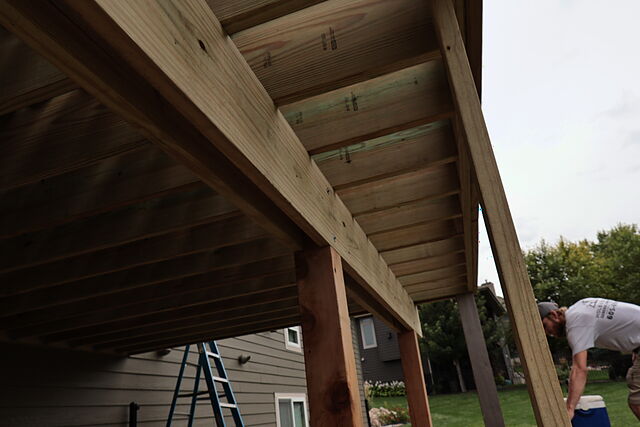
Foundation cracks, sloping floors, and sticking doors: which ones matter
How to read a crack by its direction, tell a crack from a wall that is still moving, and spot the settling signs that show up upstairs first.
Read the guide
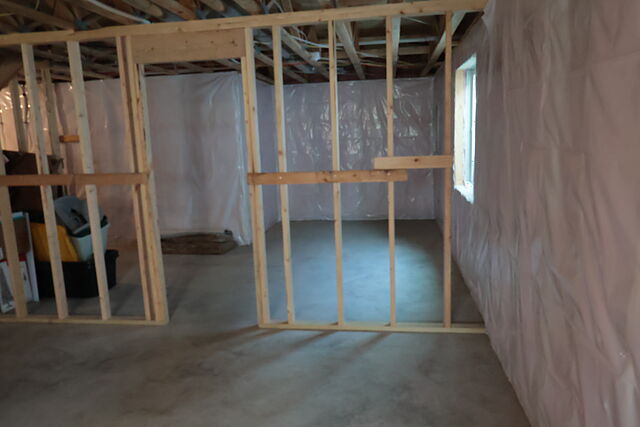
Before you finish the basement: egress, ceiling height, moisture, and the rough-in
Egress, ceiling height, moisture, the rough-in, and the mechanicals. Five checks that decide a basement finish before anyone draws the plan.
Read the guide


Ready when you are.
Calls answered after hours and on weekends.